
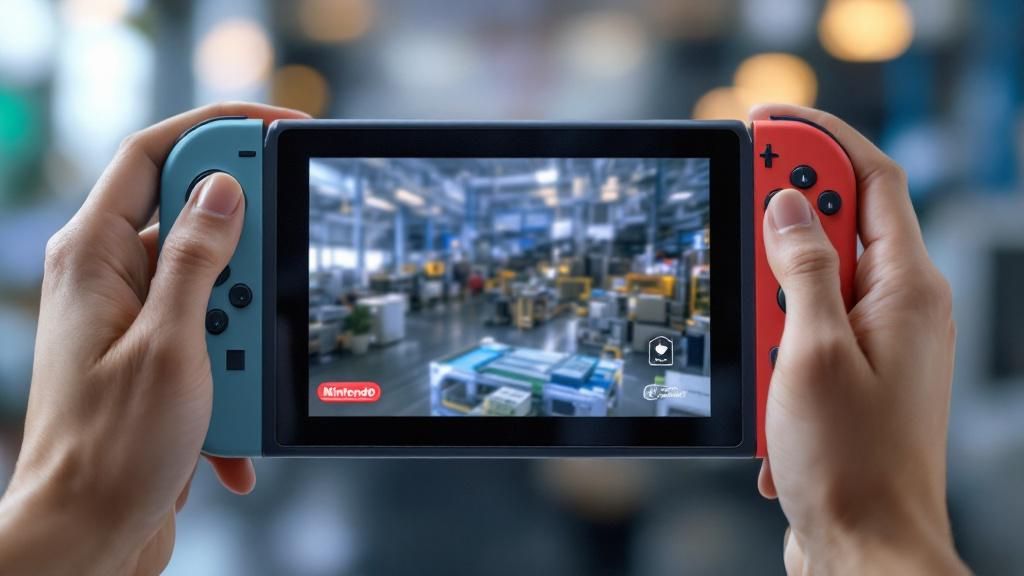
In a notable move towards environmental responsibility, Nintendo has unveiled an far-reaching commitment to transform its global manufacturing operations. The gaming giant’s substantial investment in sustainable practices marks a pivotal moment for the industry, demonstrating a decisive shift away from conventional manufacturing approaches. This extensive strategy encompasses renewable energy adoption, waste reduction strategies, and fair trade standards across all production sites globally. As customer appetite for environmentally conscious corporations grows, Nintendo’s significant declaration demonstrates how major technology companies are transforming their operational frameworks to tackle critical sustainability issues.
Environmental Responsibility and Worldwide Approach
Nintendo’s sustainability pledge represents a significant change in how the company manages manufacturing on a global scale. By allocating considerable funding in sustainable practices, the video game company acknowledges its responsibility to minimise ecological impact throughout all production facility. This planned programme reflects increasing demand from consumers for sustainability standards within the digital technology field. The company understands that sustainable manufacturing is not merely a organisational duty but a essential requirement for long-term business viability and market dominance in an rising sustainability-focused marketplace.
The worldwide strategy covers various integrated components developed to achieve broad environmental responsibility across Nintendo’s manufacturing processes. Renewable energy sources will supply energy to manufacturing facilities, substantially cutting carbon emissions and consumption of fossil fuels. Simultaneously, the company is introducing advanced waste reduction procedures and resource recovery principles throughout its supply chain. These measures reflect Nintendo’s commitment to transforming manufacturing practices at scale, confirming that sustainability takes root within operational procedures rather than remaining peripheral to core business activities.
Nintendo’s investment demonstrates a more extensive industry transformation where ecological responsibility serves as market differentiation. By establishing comprehensive sustainability requirements across global operations, the company creates a standard for industry counterparts. This anticipatory initiative responds to compliance requirements whilst fulfilling customer expectations for ethical production. The initiative establishes Nintendo as an sustainability pioneer within gaming and technology markets, reinforcing market standing whilst contributing meaningfully to worldwide climate goals and sustainable development goals.
Introduction of Sustainable Production Technologies
Nintendo’s carefully planned funding emphasises the deployment of cutting-edge green production technologies across its global production network. These advancements cover efficient production equipment, comprehensive waste reduction systems, and environmentally responsible material processing methods. By modernising established factories and constructing new environmentally conscious industrial plants, Nintendo aims to significantly lower its carbon footprint whilst maintaining the performance standards that consumers expect from the company’s products.
Renewable Energy Integration
A foundation of Nintendo’s green initiatives includes shifting factories to clean energy alternatives. The company has undertaken to establish solar panels, wind turbines, and geothermal systems at manufacturing locations globally. This comprehensive strategy to energy supply will substantially reduce dependence on conventional energy, in turn lowering environmental pollution and reducing running expenses over time. Nintendo’s initiative demonstrates the growing recognition that clean energy constitutes both an environmental imperative and a commercially sensible move.
The integration of sustainable energy systems necessitates considerable funding and detailed preparation across various areas. Nintendo has worked alongside prominent clean energy specialists to facilitate successful installation of solar, wind, and hydro technologies. These installations will supply adequate renewable power to power factory operations, with surplus electricity potentially returned to local grids. This method strengthens community relationships whilst demonstrating organisational environmental responsibility.
- Solar photovoltaic arrays fitted to manufacturing roofs
- Wind turbine farms constructed near production plants
- Geothermal heating and cooling systems deployed
- Energy storage systems employing cutting-edge battery technology
- Grid connection systems enabling excess power delivery
Nintendo’s commitment to renewable energy goes further than mere adherence to environmental regulations. The company recognises that sustainable manufacturing practices improve brand reputation and appeal to environmentally conscious consumers. By attaining energy self-sufficiency through renewable sources, Nintendo strengthens operational resilience whilst making a meaningful contribution to global climate change mitigation efforts. This comprehensive approach establishes the company as an industry leader in corporate environmental stewardship.
Long-Term Environmental Objectives and Effects
Nintendo’s funding strategy extends well beyond short-term efficiency gains, setting demanding goals for the next several decades. The company has committed to achieving carbon neutrality throughout its full production operations by 2050, with intermediate checkpoints planned for 2030 and 2040. These quantifiable goals deliver openness and responsibility, enabling stakeholders to track advancement systematically. By setting defined schedules and measurable objectives, Nintendo shows authentic dedication to environmental stewardship rather than surface-level environmental claims.
The extensive environmental impact of Nintendo’s initiative extends through the gaming industry and beyond. By introducing eco-conscious production methods, the company establishes standards for competitors and suppliers alike, spurring extensive implementation of eco-friendly technologies. This ripple effect may lower the collective carbon footprint of electronics manufacturing markedly. Furthermore, Nintendo’s commitment stimulates development in sustainable energy technologies and waste reduction strategies, advancing multiple sectors and communities globally.
Looking ahead, Nintendo expects substantial positive outcomes from this strategic initiative. Enhanced sustainability practices should bolster brand standing amongst sustainability-focused buyers whilst decreasing sustained overheads through enhanced performance. The scheme also establishes Nintendo as an industry leader in corporate responsibility, likely to draw responsible financial backers and top talent. Ultimately, this dedication reflects evolving business values, demonstrating that business returns and sustainability are complementary goals.
